Equal Pay for Asian American, Native Hawaiian, and Pacific Islander Women
Learn how the wage gap affects AANHPI women and girls and about our advocacy for economic justice for our families and communities.
Asian American, Native Hawaiian, and Pacific Islander Equal Pay Day
April 9, 2026 was Asian American, Native Hawaiian, and Pacific Islander Equal Pay Day – the day we recognize the continued inequality in pay that AANHPI women face.
AANHPI women overall earn about 83 cents for every dollar that white, non-Hispanic men make, but many AANHPI women face even wider wage gaps.
The Wage Gap for AANHPI Women, by Ethnicity
The Wage Gap: Fact vs Fiction
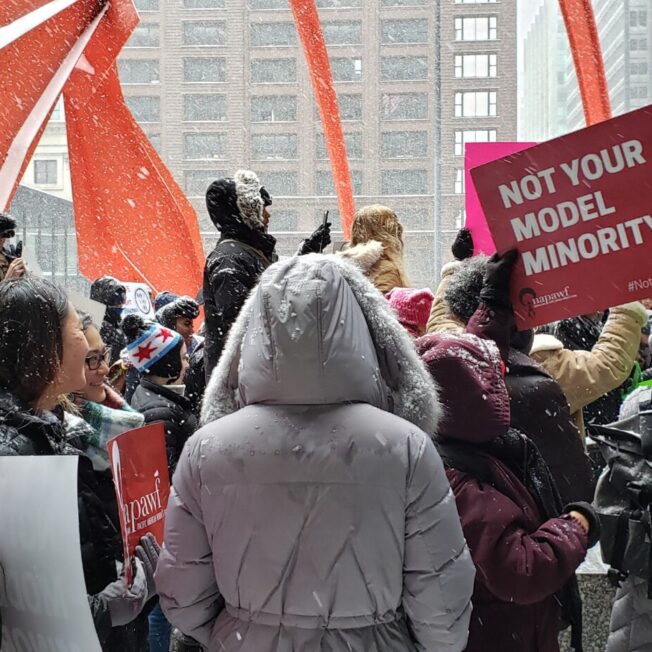
Despite persistent wage gaps, AANHPI women are often invisible in discussions about pay equity, due in part to the “model minority” myth, which falsely portrays AANHPI communities as uniformly successful and economically secure. Our new factsheet cuts through the myths and misconceptions, highlighting the real economic disparities faced by AANHPI women across different education levels, ethnicities, and communities.
AANHPI Equal Pay Panel
Bridging the Gap was a virtual event that brought together leading voices from the worker justice, gender equity, and federal policy arenas to explore the urgent issue of AANHPI women’s equal pay and chart a path toward economic justice for our communities.
Speakers
- Congresswoman Grace Meng
- Fatima Goss Graves, CEO of the National Women’s Law Center
- Sandra Engle, Executive Director, Asian Pacific American Labor Alliance
- Christina Baal-Owens, Executive Director, National Asian Pacific Women’s Forum (moderator)
Equal Pay is a Reproductive Justice Issue
The wage gap plays a large role in hindering women’s economic agency and autonomy. Even before the Supreme Court overturned Roe v. Wade, the ability to access abortion care often depends on how much money you make. With the constitutional right to abortion overturned, states across the country are implementing even more barriers to care — and these restrictions disproportionately harm people who don’t have the support or resources to overcome them.
More than one quarter (1.3 million) of Asian American and Pacific Islander women live in states that have banned or are likely to ban abortion. AANHPI women often work without paid medical, sick, or family leave, making it difficult or impossible to have the resources to take time off from work to travel and get the care they need.